

Showing posts with label Church History. Show all posts
Showing posts with label Church History. Show all posts
Tuesday, January 10, 2012

Monday, January 9, 2012

Sunday, January 8, 2012


Friday, October 28, 2011
How young girls are lured into prostitution (3)

How Old are Prostitution Rings that infiltrate the Christian Churches,
and disguise themselves as "Christian" groups?
Incredibly, this technique was used by a powerful group in the early 300's!
I quote here from the introduction to The Text of the Apostolos in Epiphanius of Salamis. (c.330 A.D.) , by Carroll D. Osburn, p. 3 (SBL, 2004):
"During these years in Egypt, Epiphanius' Nicene orientation was challenged by ideas that he viewed later as "poisonous snakes". One important threat came from a sexually oriented group that he later termed "Gnostics" [13]. In his response to this threat, Epiphanius demonstrated the zeal for unmasking error that became characteristic of his later life [14].
______________________________
13. See Pourkier, L'heresiologie chez Epiphane de Salamine, 30-32; and Bentley Layton, "The Riddle of th Thunder", in Nag Hammadi, Gnosticism, and Early Christianity (ed. C. Hedrick and R. Hodgson; Peabody, Mass.: Hendricson, 1986), 52.
14. Epihanius, Panarion Haereses 26.17.4-9.
(- Osburn, The Text...p. 3 fwd)
and disguise themselves as "Christian" groups?
Incredibly, this technique was used by a powerful group in the early 300's!
I quote here from the introduction to The Text of the Apostolos in Epiphanius of Salamis. (c.330 A.D.) , by Carroll D. Osburn, p. 3 (SBL, 2004):
"During these years in Egypt, Epiphanius' Nicene orientation was challenged by ideas that he viewed later as "poisonous snakes". One important threat came from a sexually oriented group that he later termed "Gnostics" [13]. In his response to this threat, Epiphanius demonstrated the zeal for unmasking error that became characteristic of his later life [14].
'With impudent boldness moreover, they tried to seduce me themselves...I was pitied and rescued by my groaning to God.... Now the women who taught this trivial myth were very lovely to look at, but in their wicked minds they had all the devil's ugliness. ... I lost no time reporting them to the bishops there, and finding out which ones were hidden in the Church. They were expelled from the city, about 80 of them.'Athanasius returned to Egypt after the Council of Nicea and had a good reception in pro-Nicene monastic circles that were loyal to himself and Alexander, his anti-Arian predecessor. In this pro-Nicene monastic environment, Epiphanius' anti-Arian views were strengthened."
______________________________
13. See Pourkier, L'heresiologie chez Epiphane de Salamine, 30-32; and Bentley Layton, "The Riddle of th Thunder", in Nag Hammadi, Gnosticism, and Early Christianity (ed. C. Hedrick and R. Hodgson; Peabody, Mass.: Hendricson, 1986), 52.
14. Epihanius, Panarion Haereses 26.17.4-9.
(- Osburn, The Text...p. 3 fwd)
Monday, September 26, 2011
Esther, Star of the OT: Part 12: Sources

The most remarkable and yet obvious explanation for the Book of Esther is of course its historicity. This also accounts better than any other theory for its form and content, as well as its national, unanimous and unhesitating embracement by Jews for millenia, stretching back beyond pre-Christian times.
Yet these observations were well known and discussed in Europe and the West as early as the first half of the 19th century. The famous Biblical Handbook by T.H. Horne, An Introduction to the Critical Study and Knowledge of the Holy Scriptures (9 editions between 1822 and 1852), all of them sporting the following concise but quite adequate and detailed account of the book:
SECTION X. (pp. 64-67)
ON THE BOOK OF ESTHER.
I. Title. — II. Author. — III. Argument. — IV. Synopsis of its Contents.
I. This book, which derives its name from the person whose history it chiefly relates, is by the Jews termed Megillah Esther, or the volume of Esther. The history it contains comes in between the sixth and seventh chapters of Ezra: its authenticity was questioned by some of the fathers, in consequence of the name of God being omitted throughout (1), but it has always been received as canonical by the Jews, who hold this book in the highest estimation, placing it on the same level with the law of Moses. They believe that whatever destruction may attend the other Sacred Writings, the Pentateuch and the book of Esther will always be preserved by a special providence. (2).
II. Concerning the author of this book, the opinions of biblical critics are so greatly divided, that it is difficult to determine by whom it was written. Augustine and some of the fathers of the Christian church ascribe it to Ezra. By other writers it is ascribed to the joint labours of the great synagogue, who, from the time of Ezra to Simon the Just, superintended the edition and canon of Scripture. Philo the Jew assigns it to Joachin, the son of Joshua the high priest, who returned with Zerubbabel : others think it was composed by Mordecai; and others, again, attribute it to Esther and Mordecai jointly. The two latter conjectures are grounded on the following declaration in Esther 9:20-23: —
'And Mordecai wrote these things, and sent letters unto all the Jews that tvere in all the provinces of king Ahasuerus; and the Jeisos undertook to do as they had begun, and as Mordecai had written unto them.'
- But the context of the passage clearly shows that these words do not relate to the book itself, but to the circular letters which Mordecai sent to the Jews in all the provinces of the Persian empire, announcing the mighty deliverance from their enemies which had been vouchsafed to them, and instituting a perpetual anniversary in commemoration of such deliverance. (3)
The institution of this festival, and its continued observance to the present time, is a convincing evidence of the reality of the history of Esther, and of the genuineness of the book which bears her name: since it is impossible, and, in fact, inconceivable, that a nation should institute, and afterwards continue to celebrate, through a long succession of ages, this solemn annual festival, merely because a certain man among them had written an agreeable fable or romance.
A more probable opinion (and which will enable us satisfactorily to account for the omission of the name of God in this book) is, that it is a translated extract from the memoirs of the reign of the Persian monarch Ahasuerus. The Asiatic sovereigns, it is well known, caused annals of their reigns to be kept: numerous passages in the books of Kings and Chronicles prove that the kings of Israel and Judah had such annals; and the book of Esther itself attests that Ahasuerus had similar historical records, (ii. 23. vi. 1. x. 2.)
It was indispensably necessary that the Jews should have a faithful narrative of their history under Queen Esther. Now, from what more certain source could they derive such history than from the memoirs of the king her consort? Either Ezra, or Mordecai, had authority or credit enough to obtain such an extract. In this case, we can better account for the retaining of the Persian word Purim, as well as for the details which we read concerning the empire of Ahasuerus, and (which could otherwise be of no use whatever for the history of Esther) for the exactness with which the names of his ministers and of Haman's sons are recorded. The circumstance of this history being an extract from the Persian annals will also account for the Jews being mentioned only in the third person, and why Esther is so frequently designated by the title of queen, and Mordecai by the epithet of "the Jew". It will also account for those numerous parentheses which interrupt the narrative, in order to subjoin the illustrations which were necessary for a Jewish reader; and by the abrupt termination of the narrative by one sentence relative to the power of Ahasuerus, and another concerning Mordecai's greatness.
Finally, it is evident that the author of this extract, whoever he was, wished to make a final appeal to the source whence he derived it. (Esth 10:2) This very plausible conjecture, we apprehend, will satisfactorily answer the objection that this book contains nothing peculiar to the Israelites, except Mordecai's genealogy. There is, unquestionably, no mention made of Divine Providence, or of the name of God, in these memoirs or chronicles of Ahasuerus; and if the author of the extract had given it a more Jewish complexion, — if he had spoken of the God of Israel, — instead of rendering his narrative more credible, he would have deprived it of an internal character of truth. (4)
III. The transactions recorded in this book relate to the time of Artaxerxes Longimanus, (5) the same who reigned during the time of Ezra and Nehemiah. They commence about the year of the world 3544, and continue through a period not exceeding eighteen or twenty years. The book of Esther relates the elevation of a Jewish captive to the throne of Persia, and the providential deliverance of herself and people from the machinations of the cruel Haman and his associates, whose intended mischief recoiled upon themselves : thus affording a practical comment on the declaration of the royal sage: — " Though hand join in hand, the wicked shall not be unpunished : but the seed of the righteous shall be delivered." (Prov. xi. 21.)
IV. The book consists of two parts ; detailing, Part I. The Promotion of Esther ; and the essential Service rendered to the King by Mordecai, in detecting a Plot against his Life. (i. ii.) Part II. The Advancement of Haman; his Designs against the Jews, and their Frustration.
Sect. 1. The promotion of Haman, and the occasion of which he availed himself to obtain an edict for massacring the Jews, (iii.)In our copies the book of Esther terminates with the third verse of the tenth chapter: but in the Greek and Vulgate Bibles, there are ten more verses annexed to it, together with six additional chapters which the Greek and Romish churches account to be canonical. As, however, they are not extant in Hebrew, they are expunged from the sacred canon by Protestants, and are supposed to have been compiled by some Hellenistic Jew.'
Sect. 2. The consequent affliction of the Jews, and the measures pursued by them, (iv.)
Sect. 3. The defeat of Haman's particular plot against the life of Mordecai. (v. vi. vii.)
Sect. 4. The defeat of his general plot against the Jews, (viii.ix. 1 — 16.)
Sect. 5. The institution of the festival of Purim, to commemorate their deliverance (ix. 17 — 32.) ; and the advancement of Mordecai. (x.)
Original Footnotes (with addition)
1. On this account, Professor De Wette, who objects to all the other books of the Old Testament, their theocratico-mythological spirit, condemns this for its want of religion! (Prof. Turner's Translation of Jahn, p. 289.) Such is the consistency of neologian critics!
2. [ - an idea traceable to Maimonides?]
3. For an account of this festival, called the feast of Purim, see Vol. III. Pt III. Ch IV. Para 8.
4. Coquerel, Biographie Sacree, tom. i. pp. 361 — 363. (Amsterdam, 1825.)
5. Chronologers are greatly divided in opinion who was the Ahasuerus of the sacred historian. Scaliger, who has been followed by Jahn, has advanced many ingenious arguments to show that it was Xerxes who was intended ; Archbishop Usher supposes it to have been Darius the son of Hystaspes. The most probable opinion is that of Dr. Prideaux, (Connexion, sub anno 458, vol. i. pp. 270. et seq.) ; who, after a very minute discussion, maintains that the Ahasuerus of Esther was Artaxerxes Longimanus, agreeably to the account of Josephus, (Antiq. Jud. lib. xi. c. 6.) of the Septuagint version, and of the apocryphal additions to the book of Esther. The opinion of Prideaux is adopted by Bishops Tomline and Gray, and the very accurate chronologer. Dr. Hales. (See Gray's Key, p. 227. Tomline's Elements, vol. i. p. 93. Dr. Hales's Analysis, vol. 11. book i. pp. 524. et seq.) We may therefore conclude, that the permission given to Nehemiah to rebuild the walls of Jerusalem was owing to the Influence of Esther and Mordecai, and that the emancipation of the Jews from the Persian yoke was gradually, though silently, effected by the same influence. It is not improbable that the pious reason, assigned by Artaxerxes (Ezra 7:23.) for the regulations given to Ezra, originated in the correct views of religion which were communicated to him by his queen Esther.
All in all, the combination of arguments carries a probability that appears overwhelming. This book is composed largely of Babylonian court records, with very early annotations by Jewish historians, to explain to other Israelites of the Diaspora what had happened.
Nazaroo
Saturday, September 17, 2011
The Juggling of Certainty vs. Science
 |
| Click to Enlarge |
The conflict is this:
Fundamentally, the Scientific Method is tentative and agnostic. In order to remain truly scientific, it must deal in probabilities, and ever hold the door open to new discoveries which can not only modify current ideas, but completely overthrow them. Diagrammed as above, one can see that it forms an Endless Loop, without ever establishing any permanent, universal truth.
Those engaged in Textual Criticism on the other hand, while desperately desiring to garner the support and also credibility of scientific method, nonetheless cling to ideas which at base are in fundamental opposition to science. First, is the idea of a fundamental Objective Reality, a non-changing universal truth applicable to every situation, and second is the idea that science 'progresses' inevitably toward greater and greater accuracy and surety in regard to believed facts.
Neither of these ideas is really a part of Scientific Method, or a necessary ingredient of Scientific philosophy, even though both ideas have been around as long as science, and have been more often than not inextricably bound up with scientific investigation.
The growth of science in the 19th century, also saw advancing alongside it the field of mathematics. In this field, especially the concepts of Convergence, developing from Calculus, led men to believe that almost any problem could be solved by honing and improving the appropriate method of approximation, which would naturally and result in more and more accurate statements about the world.
The New Testament Text was regarded no differently: It was believed to be only a matter of time before textual-critical methods would tighten up and produce a more and more accurate 'original text', finally as sharp and accurate as a photograph, or a scientific measurement of light-speed to 8 decimal places.
Eureka! - Hort's Innovation
Surprisingly, F.J.A. Hort was instrumental in forwarding this ideology. Contrary to current historians and various opponents, Hort's real innovation in Textual Criticism was not "the genealogical method", or the advancement in the evaluation of various sources. It was the innovation of what is now called in modern mathematics and computing as "iteration".
Iteration is the application of a set of instructions, a 'program' or algorithm,
repeatedly, usually to refine or home in on a result. Imagine for instance, a lathe that shapes table-legs. It shapes the wood by repeated cutting away of waste, leaving the desired pattern behind.
An Algorithm is usually fixed, but sometimes having optional paths or choices built in. The flexibility comes through a testing, measurement or decision process (as in the flowchart above, where the 'diamond' shapes mark points in the flow where choices will be made).
Some objects in mathematics are better and more efficiently expressed as algorithms - a group of ordered steps or instructions, meant to be applied like a recipe or prescription, and often actually acting as a description of a process or phenomenon. Other objects can ONLY be described by algorithms. Unfortunately, some objects cannot be expressed by algorithms at all.
When mathematicians began to notice algorithms, they discovered other sometimes disturbing properties of said 'objects', such as the fact that some mathematical objects and ideas have no algorithm at all. (the calculation of PI or the search for Prime Numbers are examples of things that must be calculated by 'brute force' and crude testing rather than elegant formulas).
When mathematicians noticed that some problems and ideas cannot be expressed by algorithms, it became clear that some problems were by their very nature "unsolvable".
On a simpler level, it was clear that some 'formulas' simply did not and could not 'converge'; that is could not settle down and spit out one single numerical answer. Likewise, algorithms simply did not always produce a useful or reliable result, nor could they even come to an end. They were like run-away processes, and if left to themselves would get stuck in endless loops, or randomly wander the universe of numbers.
Hort's assumption was that by using the novel idea of "iteration", meaning the repeated application of textual-critical principles and techniques, to further and further refine the content and certainty of the text, one could arrive as close as possible to the original text as the extant data and the scientific process allowed.
Unfortunately, Hort was wrong on this entire idea:
(1) There was nothing in the realm of science that indicated that discovering the 'original text' was even possible let alone probable.
(2) There was nothing that suggested that text-critical methods could or should converge toward any fixed text, let alone the true original text.
(3) Iteration itself had no magical power to force the textual variants to converge into a 'near certain' text, in spite of its allure and mathematical usefulness in certain situations. If the applied method was flawed, or ill-defined, the opposite result was inevitable.
(4) The success of iterative methods in other areas of science had no bearing on iteration as an intelligent or useful technique in textual criticism. In order for iteratiion to work, the techniques to be iterated must first be sound.
Later, when men of religion attempted to apply mathematical and scientific concepts and techniques to the problem, they were inevitably biased and their work tainted by their own conviction that these methods would converge to an absolutely certain 'original text', and that this was the way God intended us to acquire this certainly established, authoritative, original text.
Nobody thought to inquire and investigate thoroughly what methods that God Himself chose to preserve and deliver the text, and what this meant for the credibility of textual criticism of the NT as a historical science.
As it turned out, God did not use the historical-critical techniques of NT Textual Criticism to preserve and supply the NT text. God chose simpler, and quite apparently, more reliable methods than those proposed and used by modern Textual Critics to 'reconstruct' the NT text.
These facts strongly suggest that those who wish to establish, secure, or restore the NT text ought to imitate the methods used historically by God Himself for the last 2000 years.
Nazaroo
Sunday, September 4, 2011
The 'Schools' of Alexandria and Antioch (4th-5th c. A.D.)
Here is a short discussion of the so-called 'schools' of Antioch and Alexandria, culled from the Orthodox site Monachos

"...
With regard to the Christological discussions of our period (the later fourth and early fifth centuries), reference made in modern scholarship to the 'Alexandrian' and 'Antiochene' schools attempts to homogenise under two relatively coherent umbrellas two general approaches to Christological reflection centred round these great cities and sees. The Alexandrine 'school' is seen most often as the older, dating back at least to Arius, and including such notable figures as the sainted bishop Athanasius of that city, as well as the anathematised Apollinarius. The insistence of all three writers, as well as others of their converging tradition, upon the divinity of the Logos in the 'becoming' of the incarnation, and a tendency in each to see that incarnation as a 'taking on of flesh' by the Logos, has earned their 'school' the reputation of fostering another scholarly category: a 'Logos/sarx Christology'.
Those referred to as 'Antiochene'-for example Diodore of Tarsus, Theodore of Mopsuestia, Nestorius of Constantinople, John of Antioch-are often referred to as preferring a 'Logos/anthropos Christology'; namely, one in which the Logos is united to man, or even 'a man'. A dominant insistence upon the full humanity of the incarnate Christ characterises all those shuffled under this umbrella.
The classification of these 'schools' is rather rough-and-ready. While some cases are clear-cut (e.g. Nestorius, who is evidently a theological descendent of Theodore), others are more difficult. St Cyril is a notable example. As bishop of Alexandria and strongly influenced by the theology of his predecessor, Athanasius, the temptation is certainly to call him a member of the Alexandrian 'school'. Yet one is hard-pressed to consider Cyril's Christology of hypostatic union conformable to any definition of the Logos/sarx 'model' by which that 'school' is so often characterised. And while such a figure as John of Antioch is almost universally considered a member of the Antiochene 'school', his later Christological dialogues with Cyril, most pointedly their joint 'formula of reunion', addresses the incarnational becoming in a manner that hardly fits within the broad categories of Theodore's reflection, taken by most as the standard for Antiochene Christology.
So we must take care not to read these 'schools' not schools in any strict sense. Rather, they represent loci of converging approaches to Christological reflection centred around two great strongholds of theological activity in the fourth and fifth centuries. And despite the dangers of generalisation, which in historical analysis leads too often to a false-homogenisation, certain common characteristics of these converging traditions can be ascertained, and prove helpful in our reading of doctrinal reflection in its historical progression. In a general sense, these trends and tendencies are as follows:
Nazaroo

"...
With regard to the Christological discussions of our period (the later fourth and early fifth centuries), reference made in modern scholarship to the 'Alexandrian' and 'Antiochene' schools attempts to homogenise under two relatively coherent umbrellas two general approaches to Christological reflection centred round these great cities and sees. The Alexandrine 'school' is seen most often as the older, dating back at least to Arius, and including such notable figures as the sainted bishop Athanasius of that city, as well as the anathematised Apollinarius. The insistence of all three writers, as well as others of their converging tradition, upon the divinity of the Logos in the 'becoming' of the incarnation, and a tendency in each to see that incarnation as a 'taking on of flesh' by the Logos, has earned their 'school' the reputation of fostering another scholarly category: a 'Logos/sarx Christology'.
Those referred to as 'Antiochene'-for example Diodore of Tarsus, Theodore of Mopsuestia, Nestorius of Constantinople, John of Antioch-are often referred to as preferring a 'Logos/anthropos Christology'; namely, one in which the Logos is united to man, or even 'a man'. A dominant insistence upon the full humanity of the incarnate Christ characterises all those shuffled under this umbrella.
The classification of these 'schools' is rather rough-and-ready. While some cases are clear-cut (e.g. Nestorius, who is evidently a theological descendent of Theodore), others are more difficult. St Cyril is a notable example. As bishop of Alexandria and strongly influenced by the theology of his predecessor, Athanasius, the temptation is certainly to call him a member of the Alexandrian 'school'. Yet one is hard-pressed to consider Cyril's Christology of hypostatic union conformable to any definition of the Logos/sarx 'model' by which that 'school' is so often characterised. And while such a figure as John of Antioch is almost universally considered a member of the Antiochene 'school', his later Christological dialogues with Cyril, most pointedly their joint 'formula of reunion', addresses the incarnational becoming in a manner that hardly fits within the broad categories of Theodore's reflection, taken by most as the standard for Antiochene Christology.
So we must take care not to read these 'schools' not schools in any strict sense. Rather, they represent loci of converging approaches to Christological reflection centred around two great strongholds of theological activity in the fourth and fifth centuries. And despite the dangers of generalisation, which in historical analysis leads too often to a false-homogenisation, certain common characteristics of these converging traditions can be ascertained, and prove helpful in our reading of doctrinal reflection in its historical progression. In a general sense, these trends and tendencies are as follows:
| Alexandrian 'school' | Antiochene 'school' | |
| Tendency toward Platonic metaphysical approach; a desire to move beyond appearances to the 'truly real'. | Tendency toward Aristotelian stress on concrete realities, factual historicity and its analysis, and the discernable characteristics of concrete reality. | |
| Favours an allegorical reading of scripture, first proffered in a notable way by Origen; driven here by a desire to 'get to the real meaning' of given biblical passages. | Favours an historical/factual, 'literal', reading of scripture. | |
| With regard to Christ, a tendency to focus on inner, metaphysical composition and activity. | A tendency to focus upon the factual/historical aspects of the human life of Christ-what he did, said, accomplished, etc. Cf. Theodore's exegetical interest in the 'historical Jesus'. | |
| Soteriological convictions driven most often by notions of sanctification/divinisation, mystical relation, etc. | Soteriological convictions driven by corrective agency of divinity on humanity. | |
| Generally: stress laid upon the ontological oneness of Christ-the divinity and humanity form one being-wrought most often by reference to the Logos/sarx framework (though not always; cf. Cyril of Alexandria). | Generally: stress laid upon the distinction between God and man in Christ-these not only distinct in discernable attributes, but in substantive reality. Preservation of full reality and integrity of both natures. Logos/anthropos model predominates. | |
| Key weakness lies in the routine jeopardy into which the persistent distinction of natures is cast in the maintenance of the single ontological reality of the incarnate Christ. | Key weakness lies in the difficulty in expressing the genuine union of the two natures, and indeed the true oneness or singular subjectivity of the incarnate Christ. |
Our thanks to the anonymous author of that useful overview.
Nazaroo
Monday, July 18, 2011
Esther, Star of the OT: Part 3: Martin Luther (cont.)
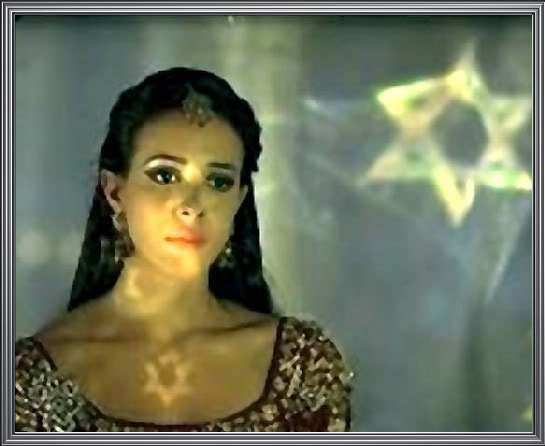
"the book of Esther...has been more attacked and sneered at than any other book of the Bible."
- W.J. Beecher, Reasonable Biblical Criticism, (1911) ch. 21, p.292
So far, (previous post) we have noted that Martin Luther (c. 1500s), leader of the German Reformation movement, definitely had a lower view of parts of Holy Scripture than many evangelists and fundamentalists would accept today, particularly in regard to the Canon, or books to be included in the Bible, and Esther's status in it.
Luther's position on the O.T. Apocrypha was not particularly abnormal, since many previous Christian writers from the time of Jerome had often separated out the Apocrypha as a secondary category of writing. One can consult William Webster's webpage for details on the variety of opinion on the Apocrypha.
However, what was novel in Erasmus and Luther was their willingness to dismiss actual Canonical writings in both the Old and New Testaments as secondary or relatively uninspired, questionable, and even of little use.
Examples range from Luther's view on NT books like James and Jude, to his view of OT books like Song of Solomon and Esther.
Recently, apologists and defenders of Martin Luther have attempted to minimize or reason away some of the less attractive aspects of the man. For instance, James Swan's page, Luther's View of the Canon (2004) attempts to downplay Luther's critical prefaces, originally printed before each book in his German Bible. It may indeed be that Luther later tempered some of his views on some books, or that others rightly dropped them from later reprints.
Yet even James Swan hasn't much a rebuttal to Martin Luther's wild statements on Esther:
4. “...Esther I toss into the Elbe. I am such an enemy to the book of Esther that I wish it did not exist, for it Judaizes too much and has in it a great deal of heathenish naughtiness . .”The quote is probably also from John Aurifaber’s version of the Table Talk. Luther is recorded as saying, “I am so great an enemy to the second book of the Maccabees, and to Esther, that I wish they had not come to us at all, for they have too many heathen unnaturalities.” In regards to the English edition of Luther’s Works, there is at least one instance in which Luther spoke negatively about Esther. In responding to Erasmus, Luther said, “…Esther…which despite their [the Jews] inclusion of it in the canon deserves more than all the rest in my judgment to be regarded as noncanonical.”
Yet, Luther still translated it and allowed it in his Bible. Curiously, Roger Beckwith (author of the outstanding book The Old Testament Canon of the New Testament Church) has said,
“It is sometimes said that Luther, following certain of the Fathers, denied the Canonicity of Esther, but Hans Bardtke has questioned this, as not taking into account of all the evidence (Luther und das Buch Esther, Tubingen Mohr, 1964).”
One can only hope that this work will one day be available in English."
James Swan's page, Luther's View of the Canon (2004)
Luther's Later Anti-Semitism
But for certain aspects of Luther, perhaps the most disturbing ones, the timeline runs the opposite way. At first, in appealing to Jews for assistance in translating the O.T., and with high hopes of converting them to Christianity, Luther befriended them:
'Before he was infected by the bacillus of anti-Semitism, Luther was something of a defender of Jews, condemning their persecution and recommending greater tolerance of them.In a pamphlet entitled That Christ Was Born a Jew, Luther expressed understanding that Jews had rebuffed the conversionary overtures of the Roman Catholic church, which he considered spiritually lax and corrupt.
"For they have dealt with the Jews as if they were dogs and not human beings," he wrote indignantly. "They have done nothing for them but curse them and seize their wealth. Whenever they converted them, they did not teach them either Christian law or life but only subjected them to papistry and monkery." '
- Sheldon Kirshner, The Canadian Jewish News, February 15, 1996
But in the latter half of his life, because Jews politely turned down his program for conversion, Luther became filled with a vitriolic hatred for the Jews, publishing slanderous hate-literature against them.
'Once it was apparent to Luther that the children of Israel were resistant to the call of Christianity, he performed a volte-face, turning his wrath on Jews.This behavior is not a minor indiscretion, or excusable character quirk: it is viewed by most historians as a large factor in creating the climate of bigotry and hate that led to the Holocaust.
In the first glimmerings of his growing antipathy, Luther upbraided Jews for their misguided interpretation of Scripture. Later, Luther's condemnation of usury took on an anti-Jewish cast, while his mean-spirited characterization of Jews as "stiff-necked, iron-hearted and stubborn as the devil" drove him further into fanaticism.
In 1543, Luther's animus probably reached its apotheosis in a vituperative pamphlet, Concerning the Jews and Their Lies, in which he urged the authorities to act against Jews with the utmost severity.' (ibid)
Nonetheless apologists for Luther downplay even this side of Luther to this day. They claim he wasn't a racist, and/or that he was just reflecting the culture of his day. But this is a ludicrous rationalizing away of Luther's part as a world-leader in setting the stage for what was to follow.
But Luther himself wouldn't have pretended for a minute that he had no influence in the world he lived in; he was one of the founders of the successful Reformation! Nor can we excuse him as if he was just a product of his culture: Long before he wrote his hate-literature, he had already written an excellent pamphlet taking the opposite view! He was obviously capable of independent thought and of choosing the right side on politically tough issues.
This is damning evidence that Martin Luther was simply not a truly converted, born-again Christian as Bible-believing Christians have come to understand the term. Other evidence substantiates the claim, that Luther, in rejecting key aspect of the full Gospel, such as good works as signs of regeneration, Luther prevented himself from fully realizing a Spirit-filled born-again life of holiness.
Remarkably, even racially oriented Christian groups have openly recognized the basic apostacy and lack of Christian spirit in Martin Luther:
"It is obvious that the faith that Martin Luther made so much of was not saving faith, or he never would have done and said the things he did. He would have had the heart of the Apostle Paul towards the Jews, for the Savior whom Paul served is the same yesterday, today, and tomorrow."
It is in this light that Luther's worldly reasoning and assessment of the book of Esther must be viewed. He cannot be taken as a rational authority or clear-headed, non-emotional source for any explanation of the book's contents.
(to be continued...)
Sunday, July 17, 2011
Esther, Star of the OT: Part 2: Martin Luther (cont.)

Why did Martin Luther reject Esther?
As we saw, Martin Luther did not especially single out Esther from other O.T. books which had been historically accepted and used by the Church. He in fact rejected several books in one fell sweep, including the Apocrypha, the Song of songs, and Ecclesiasticus.
Old Church Canon versus Jewish Canon
Some may think that Luther simply rejected books not found in the Jewish canon, i.e., books that the Jews had not officially recognized as Holy Scripture.
For instance, the Church had adopted the Greek O.T. (called the Septuagint or LXX), apparently because the Jewish people in the diaspora had translated it already and Jesus and the Apostles quoted from it. This translation was already circulating throughout the Roman Empire, in the common language, Greek.
But the Greek O.T. also contained books not found or used by Palestinian Jews who continued to work in Hebrew and Aramaic, and these books were not accepted as Holy Scripture by the Rabbis.
Thus Martin Luther did reject books that had been traditionally accepted by the Church as part of the O.T., but not recognized by non-converting Jews.
Rejection of the Apocrypha by Jerome
The early Christians had been aware of this since the time of Origen (c. 200 A.D.), who carefully compared the Hebrew and Greek versions in his Hexapla (a 6-column parallel O.T.). But the Church continued to keep the translation and canon given to them by the Apostles.
It was not until Jerome (c. 400 A.D.) that the Apocrypha, the disputed books were openly rejected, or separated and set to a lower value in the opinion of this father.
In Jerome's preface to Samuel and Kings, he says:
"...The first class:...five books of Moses, they formally call 'Torah', that is law.
...The second class is composed of the Prophets, ...
... To the third class belong the Hagiographa ['writings', histories]....
...And so there are also 22 books of the Old Testament; that is, five of Moses, eight of the prophets, nine of the Hagiographa, though some also include Ruth and Kinoth (Lamentations) amongst the Hagiographa, and think that these books ought to be reckoned separately; we should thus have 24 books of the Old Testament. ...
This preface to the Scriptures may serve as a " helmeted " introduction to all the books which we turn from Hebrew into Latin, so that we may be assured that what is not found in our list must be placed amongst the Apocryphal writings. Wisdom, therefore, which generally bears the name of Solomon, and the book of Jesus, the Son of Sirach, and Judith, and Tobias, and the Shepherd are not in the [Jewish] canon. The first book of Maccabees I have found to be Hebrew, the second is Greek, as can be proved from the very style. Seeing that all this is so, I beseech you, my reader, not to think that my labours are in any sense intended to disparage the old translators. For the service of the tabernacle of God each one offers what he can; some gold and silver and precious stones, others linen and blue and purple and scarlet; we shall do well if we offer skins and goats' hair. And yet the Apostle pronounces our more contemptible parts more necessary than others. Accordingly, the beauty of the tabernacle as a whole and in its several kinds (and the ornaments of the church present and future) was covered with skins and goats'-hair cloths, and the heat of the sun and the injurious rain were warded off by those things which are of less account."
"Jerome designates a fourth division of books, namely the apocrypha. Apocrypha is named from 'apo', which means 'very', and 'cryphon', which means obscure, because their teachings and authors are in doubt. But the catholic church has received these books in the category of holy scriptures, whose teachings are not in doubt, though its authors are; not because the authors of these books are unknown, but because these men were not of known authority. Hence the books have their power not from the authority of the authors, but rather from the reception of the church."
(Thomas Aquinas, Principium Biblicum, Opera Omnia (Index Thomisticus), vol. 3, p. 647. Translation by Dr. Michael Woodward).
The Western Church
"In the Western Church, opinions among theologians varied on the extent of the canon and the status of the Apocrypha. Some followed Augustine while others followed Jerome. Cassiodorus, the sixth century Roman writer, statesman, and monk, related the opinion of both Augustine and Jerome without rendering a judgment as to which was correct. But an examination of the historical record reveals that though some followed Augustine, and the Councils of Hippo and Carthage, the majority followed the judgment of Jerome."(W. Webster, The Old Testament Canon and the Apocrypha Part 3: From Jerome to the Reformation)
Martin Luther was plainly influenced by the opinion of Jerome, who had translated the O.T. from the Hebrew and the N.T. from the Greek into Latin afresh, creating the Latin Vulgate. Jerome had also noted the lack of some books and portions of books (e.g. the extra chapters of Daniel in the Greek), and had put them aside as separate.
Martin Luther's Idea of "Canon"
But this was not all that was going on in the head of Martin Luther. He had also noticed the attitude toward certain canonical books expressed by Erasmus, the liberal humanist who had published the Greek New Testament and gave his own parallel Latin translation, corrected more closely to the Greek text.
Luther also wrote in Bondage of the Will:
When we look again at this quote, we see that two actual canonical books are also being de-rated as "Apocryphal" by Erasmus, duly noted without objection by Luther, and used to bolster his own dismissal of Esther, also a canonical book accepted as Scripture by the Jewish canon."Though I could rightly reject this book [Ecclesiasticus], for the time being I accept it so as not to waste time by getting involved in a dispute about the books received in the Hebrew canon. For you poke more than a little sarcastic fun at this when you compare Proverbs and The Song of Solomon (which with a sneering innuendo you call the “Love Song”) with the two books of Esdras, Judith, the story of Susanna and the Dragon, and Esther (which despite their inclusion of it in the canon deserves more than all the rest in my judgment to be regarded as noncanonical).
(LW 33:110)
We see here then a total of three Canonical books, judged by Luther (and Erasmus) as not worthy of canonical status.
It should be noted that neither Erasmus nor Luther had any warrant from Jerome for doubting the status or canonicity of these particular books. Jerome had noted that two canonical books had been variously classed (he does not give the basis for this) but these were the books of Ruth and Lamentations. Nor had Jerome cast any doubt upon their canonicity, only their relative position in the three sub-classes, Torah, Prophets, Writings.
Erasmus and Luther were indeed up to something novel in regard to the canon.
Dave Armstrong explains this as follows:
"The example of Esther is thus seen as merely one example of many, of biblical books that Luther felt free to judge wholly based on his subjective opinion. This folly flows from his prior erroneous presupposition, as described by the respected Lutheran scholar and Luther expert Paul Althaus:
He thereby established the principle that the early church's formation and limitation of the canon is not exempt from re-examination . . . the canon is only a relative unity, just as it is only relatively closed. Therewith Luther has in principle abandoned every formal approach to the authority of the Bible. It is certainly understandable that Luther's prefaces were no longer printed in German Bibles.One may characterize his attitude in this way: The canon itself was, as far as Luther was concerned, a piece of ecclesiastical tradition and therefore subject to criticism on the basis of God's word.
(The Theology of Martin Luther, Philadelphia: Fortress Press, 1966, 85, 336)
(to be continued...)
Wednesday, July 13, 2011
Esther, Star of the OT: Part I: Martin Luther

Here is a great summary of Martin Luther's position given by Dave Armstrong (Did Martin Luther Deny the Canonicity of Esther?):
"Martin Luther's words will be in green.
* * * * *
* * * * *
There is a famous citation from Luther:
"The book of Esther I toss into the Elbe [river]".
Or are these really the words of Luther? Apparently this is indeed a misquote. The John Aurifaber version of Table-Talk, translated by William Hazlitt, available online, reads in its section XXIV: "The third book of Esdras I throw into the Elbe."
Mea culpa on behalf of all those (including yours truly) who have wrongly used this false citation in the past or present. Falsehood of any sort (whether inadvertent or not) does no one any good. Mine was an honest mistake. And as we shall see, scholars have done the same. it is one of those errors that got passed down through history.
This one erroneous citation doesn't mean, however, that Luther didn't denigrate and even deny the canonicity of the book of Esther (only this particular "proof" was -- by all appearances -- a botched citation at some point in the textual history; the question of who made the error will be further discussed below). For the very same section of Table-Talk also includes the following words from Luther:
I am so great an enemy to the second book of the Maccabees, and to Esther, that I wish they had not come to us at all, for they have too many heathen unnaturalities. The Jews much more esteemed the book of Esther than any of the prophets; though they were forbidden to read it before they had attained the age of thirty, by reason of the mystic matters it contains.
Even this quotation, however, gives support to the accuracy of the second mention of Esther above, as genuine ("Oh, how fond they are of the book of Esther, . . ." -- from LW, 47:156 -- cf. above: "The Jews much more esteemed the book of Esther than any of the prophets"). It gives a correlation to a statement of Luther that does quite arguably question the canonicity of Esther. Luther also wrote in Bondage of the Will:
[T]hough I could rightly reject this book [Ecclesiasticus], for the time being I accept it so as not to waste time by getting involved in a dispute about the books received in the Hebrew canon. For you poke more than a little sarcastic fun at this when you compare Proverbs and The Song of Solomon (which with a sneering innuendo you call the “Love Song”) with the two books of Esdras, Judith, the story of Susanna and the Dragon, and Esther (which despite their inclusion of it in the canon deserves more than all the rest in my judgment to be regarded as noncanonical).
(LW 33:110)
Here is a second rendering:
Though I might with justice repudiate this book [Ecclesiasticus], yet for the present I receive it, so as not to lose time by entangling myself in a dispute about books received into the Jewish canon. You are somewhat biting and derisive yourself about that canon, when you compare the Proverbs of Solomon and the Love-song (as with a sneering innuendo you term it) to the two books of Esdras and Judith, and the History of Susanna and of the Dragon, and the book of Esther (though they have this last in their canon; in my opinion, however, it is less worthy to be held canonical than any of these).So now we have the evidence of Luther saying he is an "enemy" of Esther; wishing that it "had not come to us at all" and that it is "less worthy to be held canonical" than "Esdras and Judith, and the History of Susanna and of the Dragon": books universally regarded by Protestants as non-canonical.
(The Bondage of the Will, J.I. Packer and O.R. Johnston translation, Grand Rapids: MI: Revell, 1957, Reprint October 1999, 143)
- Dave Armstrong
__________________________________________________
Armstrong's article should be read in full. It shows that it wasn't simply Counter-Reformation Roman Catholics who noted this problematic aspect of Martin Luther. In fact Luther's opinion was most underlined and objected to by Protestant commentators and analysts. (RCs mostly write for themselves, and hardly penetrate the awareness of the non-Catholic public).
The question now is, on what basis did Martin Luther reject the book of Esther, and what grounds, if any, does anyone have for questioning its authenticity, canonicity, and authority?
This is what we shall explore in the next few articles in this series on Esther: Star of the OT.
Nazaroo
Monday, July 4, 2011
Zwingli was also a murderer

Zwingli and Zurich - 1523
Zwingli apparently worked out his doctrinal view independently of Luther.
Both Zwingli and Luther wanted reform by realignment with the Bible, and held that the church had no authority other than the Bible. But Zwingli was closer to Erasmus in his ideas of education and moral reform. Zwingli claimed the Bible could interpret itself in all important matters. Like Erasmus, he insisted on appeal to the original languages and the assistance of knowledge of grammar, literary forms, dictionaries etc.
Zwingli and Luther parted ways over the interpretation of the Eucharist (the meaning of the bread-sharing ritual). Luther, although distancing himself from Roman Catholic doctrine on other things, continued to believe in the bodily presence of Jesus at the "mass", retaining its magical, almost superstitious content.
Luther was crudely literal: although rejecting medieval 'transubstantiation' as Aristotelian, he believed Christ was indeed 'present' in the Eucharist. He believed that Christ's words at the Last Supper must be interpreted literally: "this is my body" (Matt. 26:26). For if not, according to Luther, then the Bible could not be interpreted reliably.
Zwingli allowed other interpretations: He saw that the Bible was full of statements that superficially suggested one thing, but on closer inspection meant another. For him "this is my body" did not mean the bread was identical with Christ, rather it pointed to Christ's sacrifice, as a symbol, a remembrance.
The question was, did the Protestant position have the means to resolve the problem of Biblical interpretation?
If the Bible was the ultimate authority, who had the right to interpret it? Some rule or principle had to stand above the printed word itself (a paradox repugnant to simple Biblical authority).
Who would interpret the Bible for all? The Pope? An ecumenical council?
Zwingli's and Zurich's solution was the city council.
They decided first that the city was bound to be obedient to the "word of God". Now the council, duly elected representatives of Zurich's Christians, claimed the right of interpretation. Authority was transfered from Pope and bishops to elected representatives.
The danger of interpretation based on politics rather than its own merits was ignored by Zwingli.
Luther tolerated images and icons, while Zwingli held that the O.T. ban on images was binding on all Christians. In 1524 Zurich city banned all religious imagery, and iconoclastic riots spread throughout the region.
Inevitably power corrupts, and when confronted with a growing threat from more radical reformers, Zwingli got personally involved in their suppression and execution, including the 1527 public execution of Felix Manz, formerly an ally, but one who held there was no warrant for infant baptism. Refusing to recant his views, he was tied up and drowned in the Limmat River .
Shortly afterward, internal threats to Zwingli's platform were rendered insignificant by external threats. The five Catholic cantons of Switzerland, alarmed at the rise of Protestantism, declared war on Zurich in Oct. 1531. The other Protestant cantons acted like cowards, or were frozen by divisions over doctrine, and in the unfortunate battle of Kappel, Zwingli was mortally wounded.
Zurich's experiment abruptly collapsed into confusion and obscurity.
Thus in the history, a correlation has apparently been maintained between stepping way over the line in terms of arrogant authority, and turning the Gospel inside out, persecuting others and approving of murder and torture, and ultimate humiliating downfall.
Luther was not in the Spirit of Christ when he ultimately denigrated the authority of Holy Scripture, and began to maliciously persecute the Jewish people, publishing nasty tracts and pamphlets, and contributing hugely in fanning the flames of bigotry, ignorance and anti-Semitism. Nor was Luther able ultimately to shake of Roman errors. Finally, Luther's philosophy of taking sin lightly, even embracing it so that grace and salvation might abound and be more certain, was directly opposed to Paul's real teaching in Romans.
Zwingli was not in the Spirit of Christ when he hounded and persecuted his theological opponents, right or wrong, and ended up murdering them. Nor was he right in the idea that a council could dictate the meaning of Holy Scripture for men. Nor was it right that a city council should impose death and torture on opponents and conscientious dissenters. Nor was Zwingli right in opposing the simple Baptist Felix Manz, and having him murdered.
Calvin was not in the Spirit of Christ when he too angrily pursued his opponent Servetus over the Trinity, and was instrumental in his being horribly burned alive. Nor was he teaching sound doctrine when he embraced a philosophy of predestination which ultimately turned the true Gospel upside down and made it a cartoon caricature of itself.
Each of these Religious leaders had some points, and may have started out sincerely enough, but each, through corrupting power and human arrogance went wildly astray, abandoning the simple Gospel of Christ.
None of these Religious leaders was guided by the Holy Spirit, but instead they were guided by what Paul calls "the natural man", and were incapable of truly grasping the Spiritual truth of the simple Gospel.
Sunday, June 19, 2011
A Hard Look at the Book of Acts (2) Roman Background

Here's a brief Roman chronology for the same period as the book of Acts, taken from H. Scullard, From the Gracchi to Nero (5th ed. 1982):
30 A.D. Publications of the History of Velleius Paterculus
31 Tiberius, consul v, with Sejanus. Gaius recieves toga virilius. Sejanus put to death. Marco appointed Praetorian Prefect
33 Death of Agrippaina on island of Pandateria. Gaius quaestor. Financial difficulties in Rome. Possible date for the Crucifixion of Christ.
34 Palestinian Tetrarchy of Philip incorporated into Syria
36 Pontius Pilate sent to Rome by L. Vitellius govenor of Syria
37 Death of Tiberius Caesar (16 march) Accession of Gaius ('Caligula') he is consul with Claudius. Commagene re-established as a client kingdom
38 Death and deification of Drusilla. Jewish disturbances in Alexandria. Polemo II receives Pontus and Cotys Armenia Minor
39 Gaius goes to the Rhine. Julia and Agrippina exiled
40 Gaius expedition to the Channel, returns to Rome. Ptolemy of Mauretania murdered in Rome, revolt in Mauretania. Jewish embassy from Alexandria to Rome. Agrippa I receives kingdom of Antipas. Judaea restless
41 Gaius murdered (24 Jan) Claudius made emperor. The Chauci defeated. Claudius settles Alexandrian trouble. Agrippa I receives Judaea and Samaria. Exile of Seneca to Corsica
42 Revolt of Scribonianus in Dalmatia: his suicide. Mauretania organized as two provinces
43 Expedition to Britain. Lycia made an imperial province
44 Claudius' triumph over Britain. Achaea and Maccedonia transferred to Senate. Death of Herod Agrippa I. Judaea reverts to provincial status
46 Thrace made a province
47 Triumph of Aulus Plautius for conquest of Britain. Claudius and L. Vitellius censors. Ludi Saeculares. Corbulo campaigns against Frisii. Ostorius Scapula in Britain
48 Messalina killed
49 Seneca recalled from Corsica and made praetor and Nero's tutor
50 Claudius adopts Nero as Guardian for Britannicus. Agrippa II rules in Chalcis
51 Burrus made Praetorian prefect, Vespasian consul. Caratactus defeated in Wales Vologeses king of Parthia (or in52) Gallio proconsul in Achaea (51-52)
53 Nero marries Octavia . Parthians occupy Armenia and Tiridates recovers the throne
54 Death of Claudius. Accession of Nero. Caldius deified
55 Britannicus poisoned. Pallus dismissed . Corbulo goes to the East
56 Praefecti aerarii replace quaestores aerrarii
57 Nero orders senators and knights to take part in Games
58 Nero refuses perpetual consulship. Corbulo captures Artaxata
59 Nero Murders Agrippina: establishes Greek Games. Cobulo takes Tigranocerta
60 Neronia establishes Corulo settles Armenia governor of Syria. Festus succeeds Felix as governor of Judaea
61 Revolt of Boudicca and Iceni in Britain
62 Death of Burras. Tigellinus made Praetorian Prefect. Seneca disgraced. Nero divorces Octavia and marries Poppaea. Octavia murdered. Paetus surrenders to the Parthians at Rhandeia
64 Great fire at Rome. Persecution of the Christians. Domus Aurea begun. Mission to Ethiopia. Cottian Alps made a province (64-65) Pontus incorporated into Galatia
65 Conspiracy of Piso. Suicides of Seneca ans Lucan. Death of Poppaea. Musonius Rufus exiled
66 Nero crowns Tiridates king of Armenia in Rome and goes to Greece. Thrasea Paetus condemned. Conspiracy of Vinicius at Beneventum. Nero marries Statilia Messalina. Temple of Janus closed. Suicide of Petronius Rebellion in Palestine.
67 Nero at Corinthian canal. Corbulo ordered to commit suicide. Vespasian in command in Judaea: Josephus surrenders to him
68 Nero returns to Italy. Death of Nero (6 June) Galba, accepted by Senate and Praetorians, enters Rome (autumn) Verginius Rufus opposes Vindex's rebellion in Gaul. Defeat and death of Vindex. Vespasian attacks Jerusalem
69 After the death of Galba and brief reigns of Otho and Vitellius, Vespasian becomes emperor and reaches Rome in summer of 70
70 Jerusalem sieged and burned by Titus, temple destroyed.
Friday, May 27, 2011
can the C of E and the Anglican communion be saved?
The leading question above is just that. It can be taken a number of ways.
The sense in which I mean it here, and the question to be answered,
will be explained by what follows.
As an Anglican I have a right to be heard,
and according to Holy Scripture,
the church has the obligation to hear (John 7:51),
before making any hasty or negative judgements.
(1) It can be no secret now (indeed it is an open scandal before other denominations and the world), that the Church of England is in crisis.
(2) The divisive issues are of course, ordination, and same-sex 'marriage'.
(3) The Crisis of the C of E however, is not new. Its roots go back
even to the Reformation, and the various dramatic internal upheavals inside the Realm,
and also world-scale judgments upon her and her peoples from outside.
(4) Historically, the C of E did not follow the most extreme impulses of the Reformation,
such as rejection of basic Christian truth and doctrine, and apostacy.
(5) In the midst of that crisis of the Reformation, an amazing thing happened. The clergy and king galvanized themselves in an unprecedented unity of faith and doctrine, and carefully and clearly formulated an agreement and a public statement of their position: The 39 Articles.

(6) The 39 Articles were not just a statement of beliefs. They were a formal contract, an irrevocable commitment by the clergy and king
on behalf of the British people.
(7) Along with the assents and commitments were the terms of enforcement,
meant to bind all parties to their word,
and accept the consequences of any and all violations of letter,
spirit and intent expressed by the contract.
(8) The King, the clergy, the realm, and its people were committed,
committed to a unified sovereign state, a kingdom, a monarchy,
a rule of government and faith and a commitment to the peace, unity,
and common good of the nation.
(9) This was not a 'suggestion', a mere expression of faith,
but an oath of fealty, a commitment to faithfulness;
not a vague interest in the pursuit of truth or goodwill,
but a defense of historical and spiritual facts, detailed, loud and clear.
(10) The Articles of Religion and the Book of Prayer was the blueprint,
the charter, the magna charta, the constitution of the British Empire.
It precedes even the King James Bible or Authorized Version,
which was a natural consequence of this national oath and contract,
evoked by the leadership of the British Isles on behalf of her people.
Perhaps the most important part of the 39 Articles,
and its very foundation as a commitment, contract, and oath
before God and man, a public witness to the whole world,
is the very first statement, and the first foundation-stone
upon which the rest of the Articles were built:
With these words the Royal Throne of Britain spoke clearly
and firmly of an eternal bond of fealty and loyalty taken
by the collective leadership of the Realm on behalf of its people.
It is this oath, which is in the process of being broken and betrayed,
and which will bring upon the British people, government,
and even if possible the very throne of David,
the consequences and curses of unbelief and apostacy,
the sure ruin and devastation of any nation which knowingly and willingly
takes such a sacred and holy oath before the very throne of
the Most High and Living God, and King of Kings and Lord of Lords.
What can a small, pitiful and loyal subject of the Realm, crown, and kingdom of God do,
when so precious a gift and calling is forsaken by a people,
left to fall into ignorance and darkness by a faulty and misguided leadership?
Pray for our leaders we must.
Pray for a new King who can as a worthy steward
of the greatest commission and nation made without hands,
step up and guide her out of darkness,
and not leave her to fall into pit of foolishness.
We don't need another Queen Victoria,
at who's helm the British peoples sailed to shipwreck.
We need a spiritual revival at the highest levels of leadership in Britain.
Don't call this a church.
We should be too ashamed to do so,
for doing so would inevitably force us to compare it to what it once was,
from the time of the Authorized Version until the 1860s,
and the fiasco of the Revised Perversion.
nazaroo
The sense in which I mean it here, and the question to be answered,
will be explained by what follows.
As an Anglican I have a right to be heard,
and according to Holy Scripture,
the church has the obligation to hear (John 7:51),
before making any hasty or negative judgements.
(1) It can be no secret now (indeed it is an open scandal before other denominations and the world), that the Church of England is in crisis.
(2) The divisive issues are of course, ordination, and same-sex 'marriage'.
(3) The Crisis of the C of E however, is not new. Its roots go back
even to the Reformation, and the various dramatic internal upheavals inside the Realm,
and also world-scale judgments upon her and her peoples from outside.
(4) Historically, the C of E did not follow the most extreme impulses of the Reformation,
such as rejection of basic Christian truth and doctrine, and apostacy.
(5) In the midst of that crisis of the Reformation, an amazing thing happened. The clergy and king galvanized themselves in an unprecedented unity of faith and doctrine, and carefully and clearly formulated an agreement and a public statement of their position: The 39 Articles.

(6) The 39 Articles were not just a statement of beliefs. They were a formal contract, an irrevocable commitment by the clergy and king
on behalf of the British people.
(7) Along with the assents and commitments were the terms of enforcement,
meant to bind all parties to their word,
and accept the consequences of any and all violations of letter,
spirit and intent expressed by the contract.
(8) The King, the clergy, the realm, and its people were committed,
committed to a unified sovereign state, a kingdom, a monarchy,
a rule of government and faith and a commitment to the peace, unity,
and common good of the nation.
(9) This was not a 'suggestion', a mere expression of faith,
but an oath of fealty, a commitment to faithfulness;
not a vague interest in the pursuit of truth or goodwill,
but a defense of historical and spiritual facts, detailed, loud and clear.
(10) The Articles of Religion and the Book of Prayer was the blueprint,
the charter, the magna charta, the constitution of the British Empire.
It precedes even the King James Bible or Authorized Version,
which was a natural consequence of this national oath and contract,
evoked by the leadership of the British Isles on behalf of her people.
Perhaps the most important part of the 39 Articles,
and its very foundation as a commitment, contract, and oath
before God and man, a public witness to the whole world,
is the very first statement, and the first foundation-stone
upon which the rest of the Articles were built:
HIS MAJESTY'S DECLARATION.
"Being by God's Ordinance, according to one just Title,Defender of the Faith, and Supreme Governor of the Church,within these our Dominions, We hold it most agreeableto this our Kingly Office, and Our own religous Zeal, toconserve and maintain the Church committed to OurCharge, in Unity of true Religion, and in the Bond of Peace;and not to suffer unnecessary Disputations, Altercations, orQuestions to be raised, which may nourish Faction bothin the Church and Commonwealth. We have therefore,upon mature Deliberation, and with the Advice of so manyof Our Bishops as might convenientlv be called together,thought fit to make this Declaration following:
That the Articles of the Church of England (which havebeen allowed and authorized heretofore, and which OurClergy generally have subscribed unto) do contain the trueDoctrine of the Church of England agreeable to God'sWord: which We do therefore ratify and confirm, requiringall our loving Subjects to continue in the uniform Professionthereof, and prohibiting the least difference from the saidArticles; which to that End We command to be newprinted, and this Our Declaration to be published therewith.
That We are Supreme Governor of the Church ofEngland : And that if any difference arise ahout theexternal Policy, concerning the Injunctions, Canons, andother Constitutions whatsoever thereto belonging, the Clergyin their Convocation is to order and settle them, havingfirst obtained leave under Our Broad Seal so to do: and Weapproving their said Ordinances and Constitutions;providing that none be made contrary to the Laws and customsof the Land.
That out of Our Princely Care that the Churchmen maydo the Work which is proper unto them, the Bishops andClergy, from time to time in Convocation, upon their humbleDesire, shall have Licence under Our Broad Seal to deliberate of,and to do all such Things, as, being made plainby them, and assented unto by Us, shall concern the settledContinuance of the Doctrine and Discipline of the Church ofEngland now established; from which we will not endureany varying or departing in the least Degree.
That for the present, though some differences have beenill raised, yet We take comfort in this, that all Clergymenwithin Our Realm have always most willingly subscribed tothe Articles established; which is an argument to Us, thatthey all agree in the true, usual, literal meaning of the saidArticles; and that even in those curious points, in whichthe present differences lie, men of all sorts take the Articlesof the Church of England to be for them; which is anargument again, that none of them intend any desertion,of the Articles established.
That therefore in these both curious and unhappy differences,which have for so many hundred years, in differenttimes and places, exercised the Church of Christ, We will,that all further curious search be laid aside, and thesedisputes shut up in God's promises, as they be generally setforth to us in the holy Scnptures, and the general meaningof the Articles of the Church of England according to them.And that no man hereafter shall either print, or preach, todraw the Article aside any way, but shall submit to it inthe plain and full meaning thereof: and shall not put hisown sense or comment to be the meaning of the Article, butshall take it in the literal and grammatical sense.
That if any publick Reader in either of Our Universities,or any Head or Master of a College, or any other personrespectively in either of them, shall, affix any new sense toany Article, or shall publickly read, determine, or hold anypublick Disputation, or suffer any such to be held eitherway, in either of the Universities or Colleges respectively : orif any Divine in the Universities shall preach or print anything either way, other than is already established in Convocationwith Our Royal Assent; he, or they the Offenders,shall be liable to Our displeasure, and the Church's censurein Our Commission Ecclesiastical, as well as any other:And We will see there shall be due Execution uponthem."
and firmly of an eternal bond of fealty and loyalty taken
by the collective leadership of the Realm on behalf of its people.
It is this oath, which is in the process of being broken and betrayed,
and which will bring upon the British people, government,
and even if possible the very throne of David,
the consequences and curses of unbelief and apostacy,
the sure ruin and devastation of any nation which knowingly and willingly
takes such a sacred and holy oath before the very throne of
the Most High and Living God, and King of Kings and Lord of Lords.
What can a small, pitiful and loyal subject of the Realm, crown, and kingdom of God do,
when so precious a gift and calling is forsaken by a people,
left to fall into ignorance and darkness by a faulty and misguided leadership?
Pray for our leaders we must.
Pray for a new King who can as a worthy steward
of the greatest commission and nation made without hands,
step up and guide her out of darkness,
and not leave her to fall into pit of foolishness.
We don't need another Queen Victoria,
at who's helm the British peoples sailed to shipwreck.
We need a spiritual revival at the highest levels of leadership in Britain.
Don't call this a church.
We should be too ashamed to do so,
for doing so would inevitably force us to compare it to what it once was,
from the time of the Authorized Version until the 1860s,
and the fiasco of the Revised Perversion.
nazaroo
Tuesday, May 17, 2011
Revelation for Dummies (2)
The Roman/Jewish Wars (68 - 135 A.D.) were a rapid and colossal disaster for the Jewish people, because the full might of the Roman Empire was brought to bear upon them.
In 69 A.D. the Galilean Rebellion was squashed;
In 70 A.D. Jerusalem was burned, and the Temple destroyed, and possibly millions of Jews were killed or enslaved.
In 73 A.D. the Zealots at Masada were sieged and destroyed.
The final rebellion of Bar Kochba (120-132 A.D.) was also quashed.
But Christianity, although frequently persecuted, continued to spread throughout the Roman Empire, even heavily infecting the Roman Armies.
Here is the next diagram in the analysis:
The single most important event in the first 500 years of Christianity has to be the conversion of the Emperor Constantine, and the legalization of the Christian Religion. Around 300 A.D., Emperor Constantine legalized Christianity, which was formerly and underground and illegal religion, often persecuted by Roman authorities.
For our purposes, it matters little whether or not Constantine was truly or completely converted, or if instead he was simply a shrewd leader, realizing that by 300 A.D. a large number of Roman soldiers and citizens were Christian converts.
The fact is, Constantine legalized Christianity, and to prove the point, began to tear down and loot pagan temples, and use the wealth to build Christian cathedrals all over the Empire. Constantine also held Ecumenical councils, allowing Christian leaders (at least those willing to cooperate with the Empire) some participation and power in organizing and defining mainstream Christianity.
The second thing Constantine did was to abandon Rome entirely, and rebuild his new Capital and Headquarters in Greece, at Byzantium (Constantinople, now called Istanbul). The Empire was now ruled from the East (Greece), and the Latin West was left abandoned, and quickly succumbed to local barbarian invasions, beginning around 420 A.D.
The West sank into the Dark Ages, while the East flourished, enjoying one of the greatest eras of Christian literary and intellectual activity.
The Latins, perhaps in ironic poetic justice for their most recent and violent persecution of the Christians, fell to the barbarians again and again, their economy, security and lives destroyed by sacking and pillaging.
If the book of Revelation had failed to at all mention what was the most important development in Christian history, while at the same time being a prophecy focussed on the Christian future, it would have to be called a prophetic failure.
To get an idea of how drastic the changeover was, take a look at these BEFORE and AFTER maps:
Nazaroo
In 69 A.D. the Galilean Rebellion was squashed;
In 70 A.D. Jerusalem was burned, and the Temple destroyed, and possibly millions of Jews were killed or enslaved.
In 73 A.D. the Zealots at Masada were sieged and destroyed.
The final rebellion of Bar Kochba (120-132 A.D.) was also quashed.
But Christianity, although frequently persecuted, continued to spread throughout the Roman Empire, even heavily infecting the Roman Armies.
Here is the next diagram in the analysis:
 |
| Conversion of Empire: Click to Enlarge |
For our purposes, it matters little whether or not Constantine was truly or completely converted, or if instead he was simply a shrewd leader, realizing that by 300 A.D. a large number of Roman soldiers and citizens were Christian converts.
The fact is, Constantine legalized Christianity, and to prove the point, began to tear down and loot pagan temples, and use the wealth to build Christian cathedrals all over the Empire. Constantine also held Ecumenical councils, allowing Christian leaders (at least those willing to cooperate with the Empire) some participation and power in organizing and defining mainstream Christianity.
The second thing Constantine did was to abandon Rome entirely, and rebuild his new Capital and Headquarters in Greece, at Byzantium (Constantinople, now called Istanbul). The Empire was now ruled from the East (Greece), and the Latin West was left abandoned, and quickly succumbed to local barbarian invasions, beginning around 420 A.D.
The West sank into the Dark Ages, while the East flourished, enjoying one of the greatest eras of Christian literary and intellectual activity.
The Latins, perhaps in ironic poetic justice for their most recent and violent persecution of the Christians, fell to the barbarians again and again, their economy, security and lives destroyed by sacking and pillaging.
If the book of Revelation had failed to at all mention what was the most important development in Christian history, while at the same time being a prophecy focussed on the Christian future, it would have to be called a prophetic failure.
To get an idea of how drastic the changeover was, take a look at these BEFORE and AFTER maps:
 |
| BEFORE: ROMAN EMPIRE c. 200 A.D. |
 |
| AFTER: Animated GIF! Click to Enlarge |
Nazaroo
Thursday, May 5, 2011
Story of a Fatherless Youth, Eusebius

Possibly the most important story in Eusebius, is the one in Book 3 regarding Saint John the Apostle and a fatherless youth:
Eusebius' Church History, Book 3, para. 23 (5-19):
5. Clement likewise in his book entitled What Rich Man can be saved? indicates the time, and subjoins a narrative which is most attractive to those that enjoy hearing what is beautiful and profitable. Take and read the account which runs as follows:
peace6. “Listen to a tale, which is not a mere tale, but a narrative concerning John the apostle, which has been handed down and treasured up in memory. For when, after the tyrant’s death, he returned from the isle of Patmos to Ephesus, he went away upon their invitation to the neighboring territories of the Gentiles, to appoint bishops in some places, in other places to set in order whole churches, elsewhere to choose to the ministry some one of those that were pointed out by the Spirit.7. When he had come to one of the cities not far away (the name of which is given by some ), and had consoled the brethren in other matters, he finally turned to the bishop that had been appointed, and seeing a youth of powerful physique, of pleasing appearance, and of ardent temperament, he said, ‘This one I commit to thee in all earnestness in the presence of the Church and with Christ as witness.’ And when the bishop had accepted the charge and had promised all, he repeated the same injunction with an appeal to the same witnesses, and then departed for Ephesus.8. But the presbyter taking home the youth committed to him, reared, kept, cherished, and finally baptized him. After this he relaxed his stricter care and watchfulness, with the idea that in putting upon him the seal of the Lord he had given him a perfect protection.9. But some youths of his own age, idle and dissolute, and accustomed to evil practices, corrupted him when he was thus prematurely freed from restraint. At first they enticed him by costly entertainments; then, when they went forth at night for robbery, they took him with them, and finally they demanded that he should unite with them in some greater crime.10. He gradually became accustomed to such practices, and on account of the positiveness of his character, leaving the right path, and taking the bit in his teeth like a hard-mouthed and powerful horse, he rushed the more violently down into the depths.11. And finally despairing of salvation in God, he no longer meditated what was insignificant, but having committed some great crime, since he was now lost once for all, he expected to suffer a like fate with the rest. Taking them, therefore, and forming a band of robbers, he became a bold bandit-chief, the most violent, most bloody, most cruel of them all.12. Time passed, and some necessity having arisen, they sent for John. But he, when he had set in order the other matters on account of which he had come, said, ‘Come, O bishop, restore us the deposit which both I and Christ committed to thee, the church, over which thou presidest, being witness.’13. But the bishop was at first confounded, thinking that he was falsely charged in regard to money which he had not received, and he could neither believe the accusation respecting what he had not, nor could he disbelieve John. But when he said, ‘I demand the young man and the soul of the brother,’ the old man, groaning deeply and at the same time bursting into tears, said, ‘He is dead.’ ‘How and what kind of death?’ ‘He is dead to God,’ he said; ‘for he turned wicked and abandoned, and at last a robber. And now, instead of the church, he haunts the mountain with a band like himself.’14. But the Apostle rent his clothes, and beating his head with great lamentation, he said, ‘A fine guard I left for a brother’s soul! But let a horse be brought me, and let some one show me the way.’ He rode away from the church just as he was, and coming to the place, he was taken prisoner by the robbers’ outpost.15. He, however, neither fled nor made entreaty, but cried out, ‘For this did I come; lead me to your captain.’16. The latter, meanwhile, was waiting, armed as he was. But when he recognized John approaching, he turned in shame to flee.17. But John, forgetting his age, pursued him with all his might, crying out, ‘Why, my son, dost thou flee from me, thine own father, unarmed, aged? Pity me, my son; fear not; thou hast still hope of life. I will give account to Christ for thee. If need be, I will willingly endure thy death as the Lord suffered death for us. For thee will I give up my life. Stand, believe; Christ hath sent me.’18. And he, when he heard, first stopped and looked down; then he threw away his arms, and then trembled and wept bitterly. And when the old man approached, he embraced him, making confession with lamentations as he was able, baptizing himself a second time with tears, and concealing only his right hand.19. But John, pledging himself, and assuring him on oath that he would find forgiveness with the Saviour, besought him, fell upon his knees, kissed his right hand itself as if now purified by repentance, and led him back to the church. And making intercession for him with copious prayers, and struggling together with him in continual fastings, and subduing his mind by various utterances, he did not depart, as they say, until he had restored him to the church, furnishing a great example of true repentance and a great proof of regeneration, a trophy of a visible resurrection.”
Nazaroo
Subscribe to:
Posts (Atom)
